

Ah, it’s 2023, and some companies are still charming us with their ancient sales techniques because who doesn’t love a good ol’ cold call to interrupt dinner or work and transport us back to the glory days of the 90s?
In the era of rapid technological advancements and evolving customer preferences, it’s almost endearing to see some seasoned managers clinging to the belief that the key to successful cold calling lies in perfecting scripts, lines, speeches, or content to discover opportunities. While they meticulously craft these relics, they fail to acknowledge the real challenge at hand: getting people to actually pick up the phone and engage in conversation. It’s high time these old-school veterans step out of their time capsules and realize that the issue isn’t with the message, phrasing, tone or content of the call, but rather with the outdated approach that simply doesn’t resonate with today’s audience.
“doing the same thing over and over again and expecting different results.”
Albert Einstein’s definition of Insanity
These managers/companies not only spend countless hours honing their script techniques but also engaging in such quaint activities like monitoring calls or organizing call blitzes. ¿Call blitzes? Believe it or not, those do exist and the logic behind call blitzes is truly a marvel to behold; it follows the age-old wisdom of “if something doesn’t work, let’s do it even more! Maybe this time will be different”.
Most managers are aware of the inefficiency of the process, however the majority firmly believe that the inefficient effectiveness of cold calling is mostly attributed to the whims of younger generations who dislike making phone calls. While it’s true that younger generations may gravitate towards alternative channels of communication, the issue runs much deeper than a mere generational preference.
Even if the previous conception was 100% true and a company builds an entire Sales team of Gen X and Baby Boomer Sales Representatives who prefer traditional phone communication, it is important to recognize that at the other side of the line – the potential clients themselves – are under no obligation to answer, dislike getting a phone call as much as those younger reps hate doing them and 99% of those potential clients will most probably ignore whatever you have to tell them.
There are several reasons why people don’t answer the phone nowadays. The widespread use of caller ID allows individuals to screen calls, often ignoring numbers they don’t recognize. Additionally, many people keep their phones on silent mode or use features like the iPhone’s “Silence Unknown Callers” setting, which prevents the phone from ringing if the caller is not in the user’s contact list.
In the realm of B2B sales, the landscape has also shifted in a similar manner. Some seasoned managers still cling to the traditional notion of businesses being physical buildings with receptionists transferring calls to specific individuals or departments. However, the reality is that many companies have moved towards advanced communication solutions, such as Voice over Internet Protocol (VoIP), which automate and streamline the process of call routing. As a result, contacting a specific person or department has become increasingly difficult, as many employees may not even be aware of having a phone or may choose not to answer it. Additionally, many companies have discontinued providing public phone numbers on their websites, further complicating the process of reaching out to potential customers.
The COVID pandemic, remote working, and the rising trend of hot desking in hybrid work models have made cold calling even more challenging. As employees embrace working from home and adopt newer internal communication solutions like Teams, Slack, and Zoom, the need for individual phone lines and extensions has diminished. Simultaneously, hot desking, where employees share workspaces instead of having assigned desks, promotes flexibility, collaboration, and cost-efficiency, but further complicates reaching specific individuals through cold calling due to the absence of fixed phone lines and extensions.
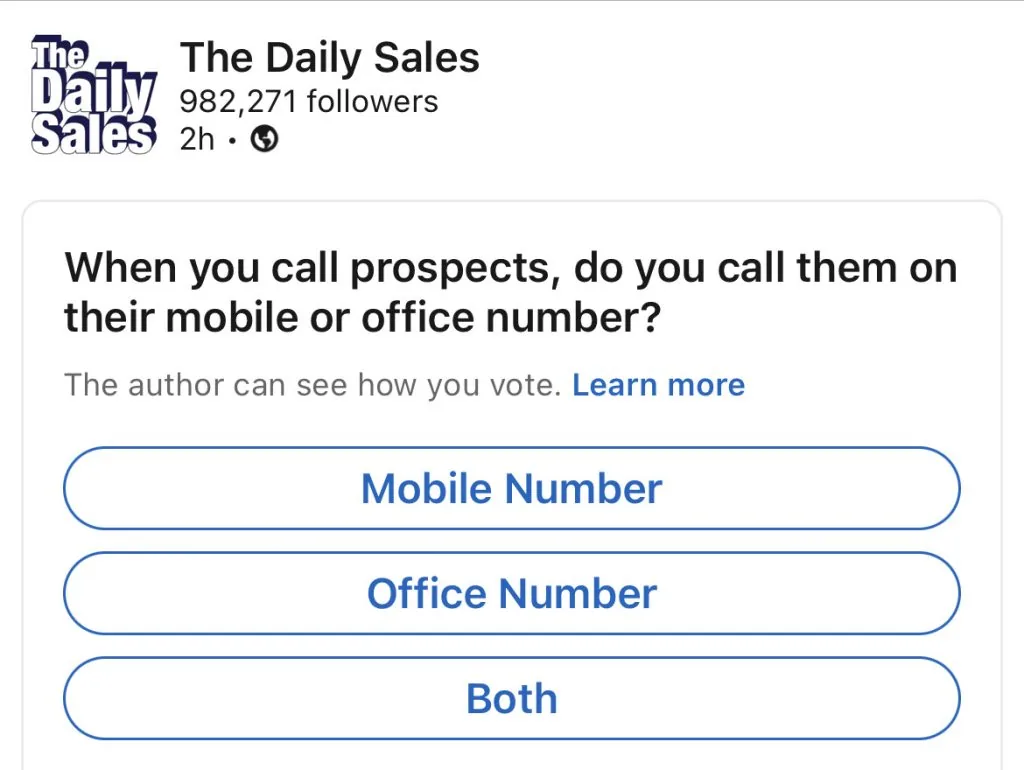
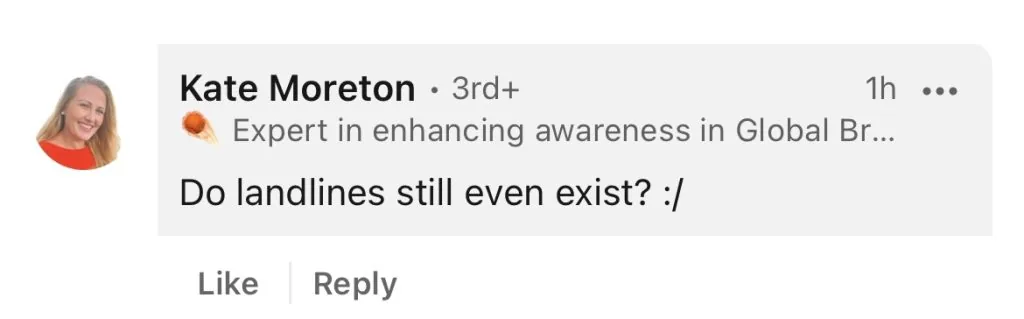
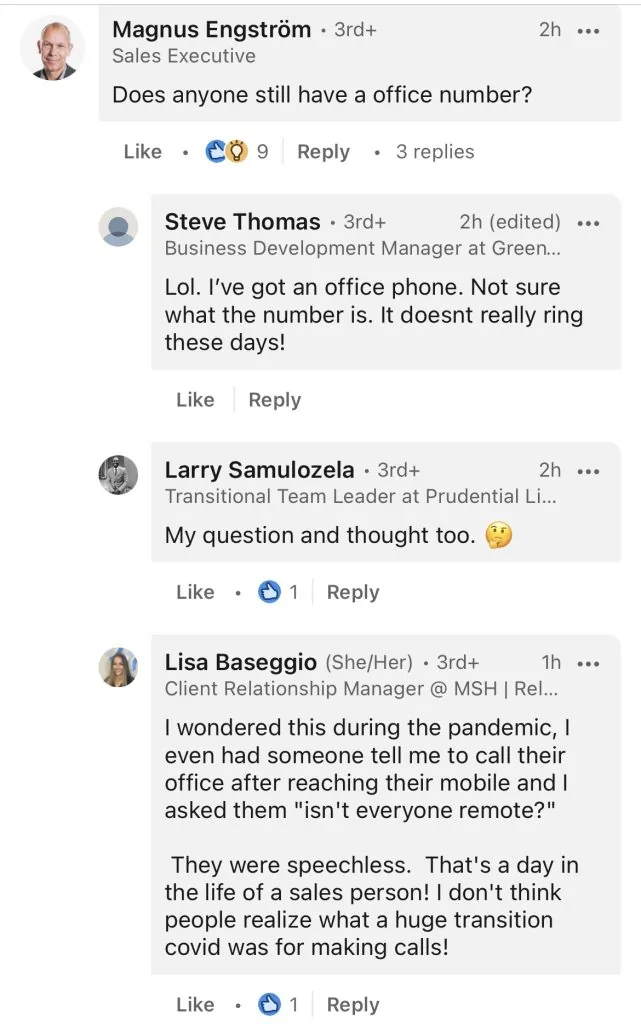
Just the other day I was reading through the comments of a poll from a very popular page for Sales People, and I found the responses amusing. See for yourself:
According to various studies and sales experts, the average connection rate for cold calls is estimated to be around 1% to 2%. This means that for every 100 calls made, only 1 to 2 of them may result in a conversation (not even a sale! but just getting someone to talk to on the phone).
Now don’t get me wrong, a personal conversation in the sales process is still very valuable and important, especially in B2B sales. Conversations can provide a personal touch, help build rapport, and facilitate clarifying complex topics. The real issue arises when managers confuse a tool such as a call, with a stage of the sales process.
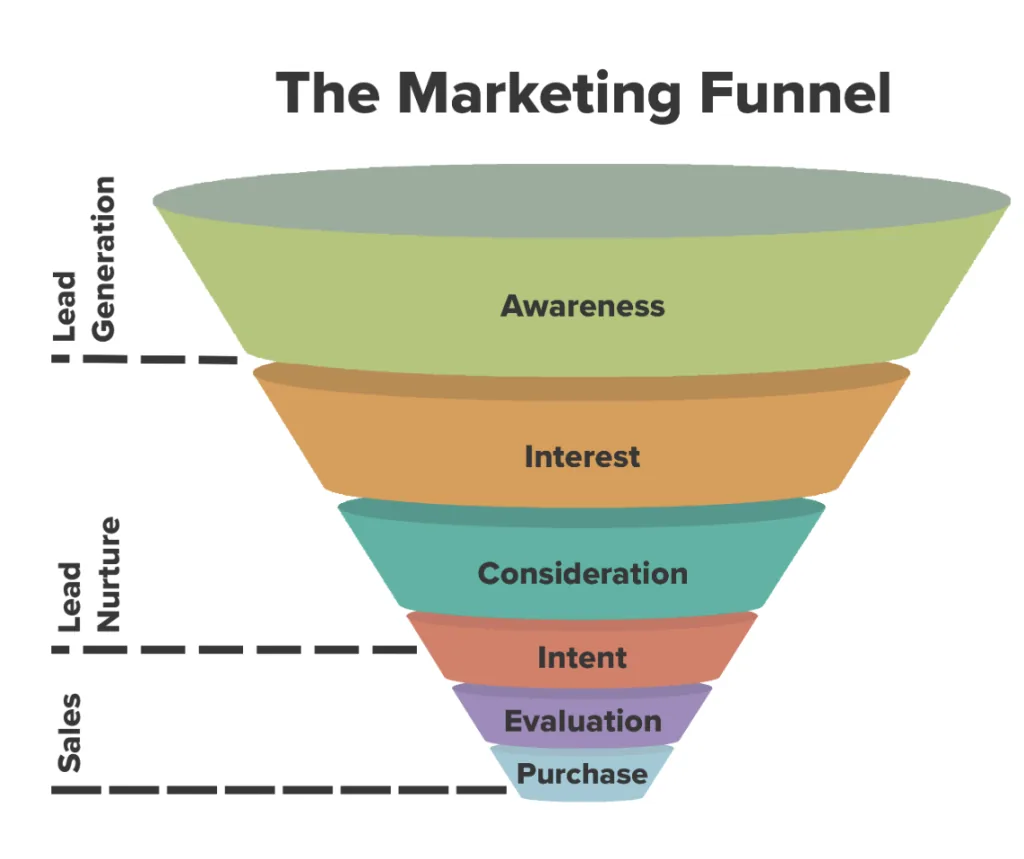
A call/conversation is a tool (same as SMS, Email, Physical meetings, etc.) and not a stage in the sales process. Many managers believe that calling should be the first step in the sales process, and there’s nothing more antique, stupid, inefficient and unscalable than this approach due to 2 main reasons;
Reason 1: Business 101. You don’t understand the difference between Sales and Marketing
Let’s start with the most basic lesson. Sales focuses on converting prospects into customers through direct interactions, while marketing involves creating awareness and generating interest in a company’s products or services using various communication strategies and channels.
If you find yourself cold calling, you’re not truly engaged in selling; instead, you’re attempting to market your product or service to an unsolicited prospect who isn’t aware of your brand or offerings. That my friend, is called Marketing and not selling. If you do it through the phone, then it’s called Telemarketing.
When a business finds itself heavily relying on cold outreach to generate leads, it should be considered a red flag, indicating that marketing strategies are not working as effectively as they should be. Some reasons for this can be:
1. Not understanding the business model of your product/service
Failing to understand the different verticals and business models such as B2B, B2C, B2E or B2B2C can lead to several issues. There’s an entire article dedicated to that matter, but regarding the need for a cold approach; using the wrong strategies can result in the following:
- Lack of Targeted Marketing: If a company’s marketing strategies are not focused on reaching the right audience, the sales team is forced to cast a wider net. By refining the target audience and aligning marketing efforts accordingly, businesses can generate more qualified leads, reducing the reliance on cold outreach.
- Ineffective Branding and Messaging: A strong brand identity and clear messaging are essential to a successful marketing strategy. If prospective customers cannot understand the value of a product or service, they are unlikely to engage with the company.
These last 2 points can provoke insufficient Lead Generation.
2. Poor Alignment Between Sales and Marketing
When sales and marketing teams are not aligned, they may work at cross purposes, leading to ineffective strategies and an increased reliance on cold outreach. To avoid this, businesses should establish clear communication channels between the two departments, ensuring that both teams are working towards the same goals and leveraging each other’s strengths.
3. Neglecting Customer Retention and Referral
Focusing solely on acquiring new customers while neglecting existing ones can also result in the need for cold outreach. By investing in customer retention strategies and encouraging referrals, businesses can maintain a healthy pipeline of leads without resorting to cold calls.
Reason 2: The world switched to be On-Demand 15 years ago!
The world has undergone a significant transformation in recent years, with on-demand services becoming the norm across various industries. From streaming platforms like Netflix to podcasts, blogs, and beyond, consumers have grown accustomed to accessing content when and how they want it.
This shift has also impacted the sales landscape, as customers now prefer to learn about products, request information, and make purchases at their own convenience. In today’s on-demand world, customers expect to learn about products and services at their own pace, conducting research online and seeking recommendations from their social networks. This shift has placed a greater emphasis on inbound marketing, where businesses create valuable content that attracts potential customers and nurtures them until they are ready to engage with the sales team (not when you call them).
Nowadays, customers increasingly prefer to initiate contact when they are ready for more information or to make a purchase (and your sales team should be 100% effective and responsive when this happens; otherwise, your potential will lose interest or end up buying with your competitor within hours or even minutes).
So, why Managers still stress their Sales Teams with Cold Calling?
There are several reasons for this but overall, it can be attributed to the following 3 aspects:
- Old School managers and/or companies ignore overall the two reasons mentioned above (differentiating Sales vs Marketing and understanding the On-Demand world) and still adhere to their old beliefs and strategies where cold calling followed a mathematical and probabilistic approach; A certain number of dials leads to a specific number of conversations, which in turn generates a predictable amount of sales. Want to double the sales? Let’s double the calls then! Over the years, the dials-to-conversations-to-sales ratio has significantly decreased; for instance, years ago, a sales representative may have needed to make 100 dials to have 20 conversations and close one sale, but nowadays, that same representative may need to make 200 or 300 dials to achieve the same result. This trend will likely continue, making cold calling even more unscalable, unpredictable, unreliable and inefficient for businesses in the long run.
- Many companies don’t have a streamlined process between marketing and sales.
- With that said, many Sales managers are accountable and under pressure to meet targets and cold calling might be the only way they know how to generate leads quickly. They may not have the time or saying in the overall Marketing/Sales strategy of the company to explore other methods that might take longer to yield results.
So, should the sales team be sitting while waiting for someone to request further information?
Absolutely not. It’s about how your resources are spent and assigned.
In today’s fast-paced and technology-driven world, the practice of manually dialing numbers to make cold calls has become increasingly unscalable and inefficient for sales professionals. For the business this also creates a very expensive CAC (Customer Acquisition Cost).
A successful business should:
- Focus their cold approach to Inbound Marketing: By creating high-quality content that appeals to potential customers, businesses can attract leads and establish themselves as trusted authorities in their industry.
- Leverage Social Media: Engaging with customers on social media platforms can help businesses establish relationships, share information about products and services, and provide timely customer support.
- Prioritize Customer Experience with Sales Orientation: Offering exceptional customer service and support is crucial in the on-demand world, as customers expect prompt and personalized assistance throughout the sales process. This is where most of your sales team’s efforts should be spent. Roles like Account Managers or Customer Success Managers should be helping your current customers while always keeping their eyes open to discover new opportunities or referral selling.
- Have a super responsive and knowledgeable Sales Team that quickly engages with those nurtured leads that are now requesting to get further information, request a quote, etc. (and this is the perfect time to make a call or set up a meeting).
In Conclusion
Persisting in antiquated sales outreach methods can pose significant dangers to a company’s long-term success and competitiveness. We can summarize those in 3 main verticals:
- Damage company’s image
- Inability to retain top talent.
- Increases the cost of lost opportunities.
As customer expectations continue to evolve, and communication preferences shift, businesses that rely on outdated techniques like cold calling risk alienating potential clients and damaging their brand image. In an era where consumers are inundated with information and offers, they are more likely to engage with businesses that provide value and resonate with their unique needs, rather than those that rely on unsolicited, impersonal approaches.
Furthermore, sticking to antique sales outreach methods can also hinder a company’s ability to attract and retain top sales talent. As younger, tech-savvy professionals enter the workforce, they are likely to be more attracted to companies that leverage modern sales and marketing strategies, including inbound marketing, social selling, and data-driven approaches.
These companies also face significant opportunity costs as:
- They miss out on potential leads and sales by diverting valuable resources and time away. Dialing 1,000 contacts manually is not only an unscalable approach, but it also risks losing potential leads to competitors, as by the time you finally connect with a promising prospect, they may have already made a purchase elsewhere due to the inefficiency of the process.
- Even when you manage to connect with someone through cold calling, you are already coming across as intrusive and/or annoying, setting your prospect in a defensive mood, making it hard to engage in productive meaningful conversation. This is a big risk for potentially great prospects who may become frustrated or annoyed by unsolicited phone calls, leading them to decline any future engagement with your product or service.